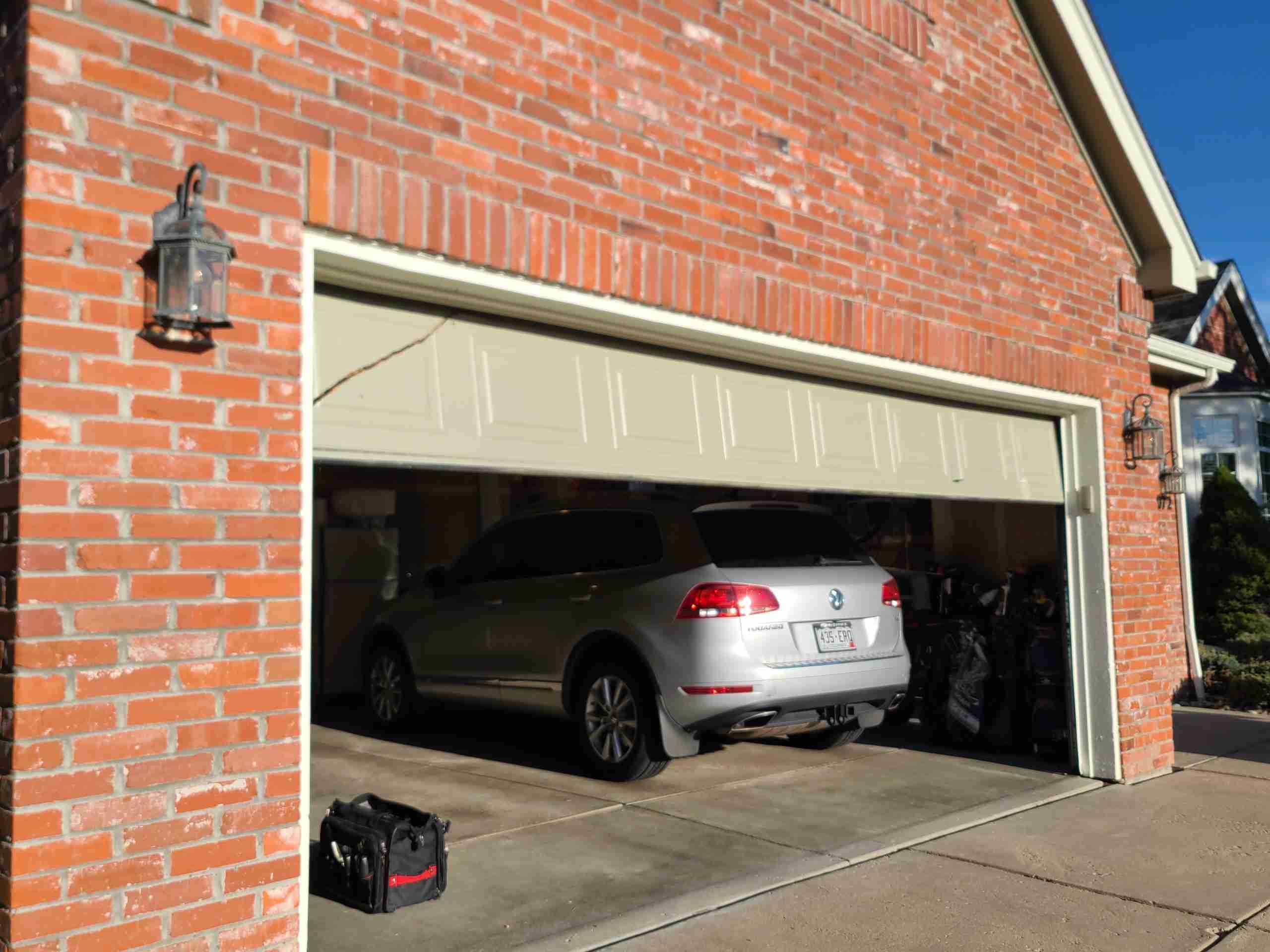
A garage door that stops halfway is more common than most people think. You press the remote, the door moves a bit, then it just stops. Or it starts to close and suddenly goes back up. Sometimes it works fine on the next try. Other times it stops at the same point every time.
There is always a reason behind it. The door is reacting to something wrong in the system. Knowing what to look for helps you decide if it is something simple to check at home, or if you need a technician to take a look.
How the System Works
A garage door has a lot of moving parts. It uses springs, cables, rollers, tracks, sensors, and an opener motor that all work together. If any one of these parts is worn, loose, or broken, the door can stop before it finishes moving. This can happen while the door is going up or coming down.
Most modern openers also have safety features built in. If the motor feels too much resistance, or if a sensor picks up a signal it does not expect, the opener will stop or reverse the door. So sometimes the door stopping halfway is the system reacting to a problem, not the opener itself failing.
Common Reasons a Garage Door Stops Halfway
1. Broken or Worn Torsion Springs
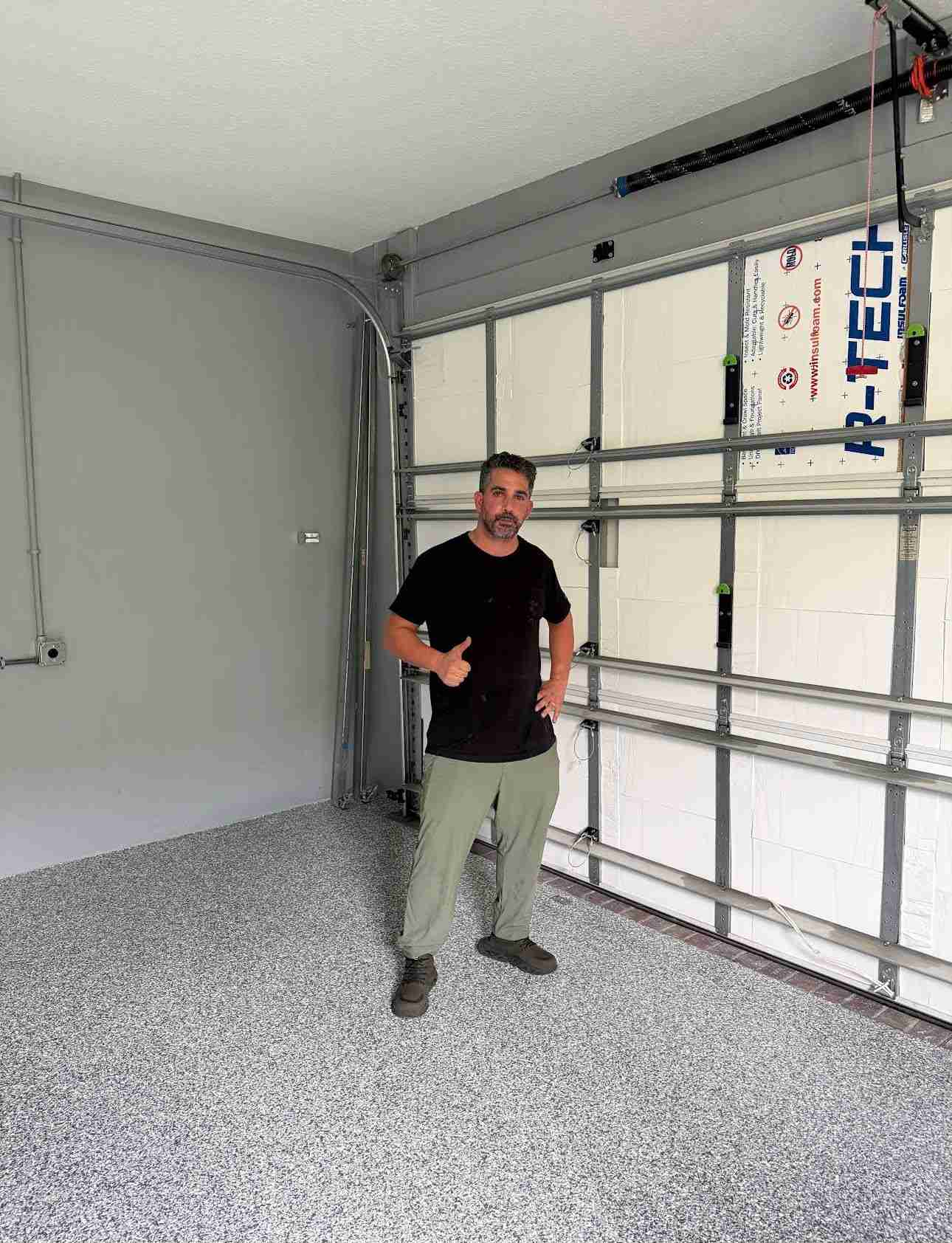
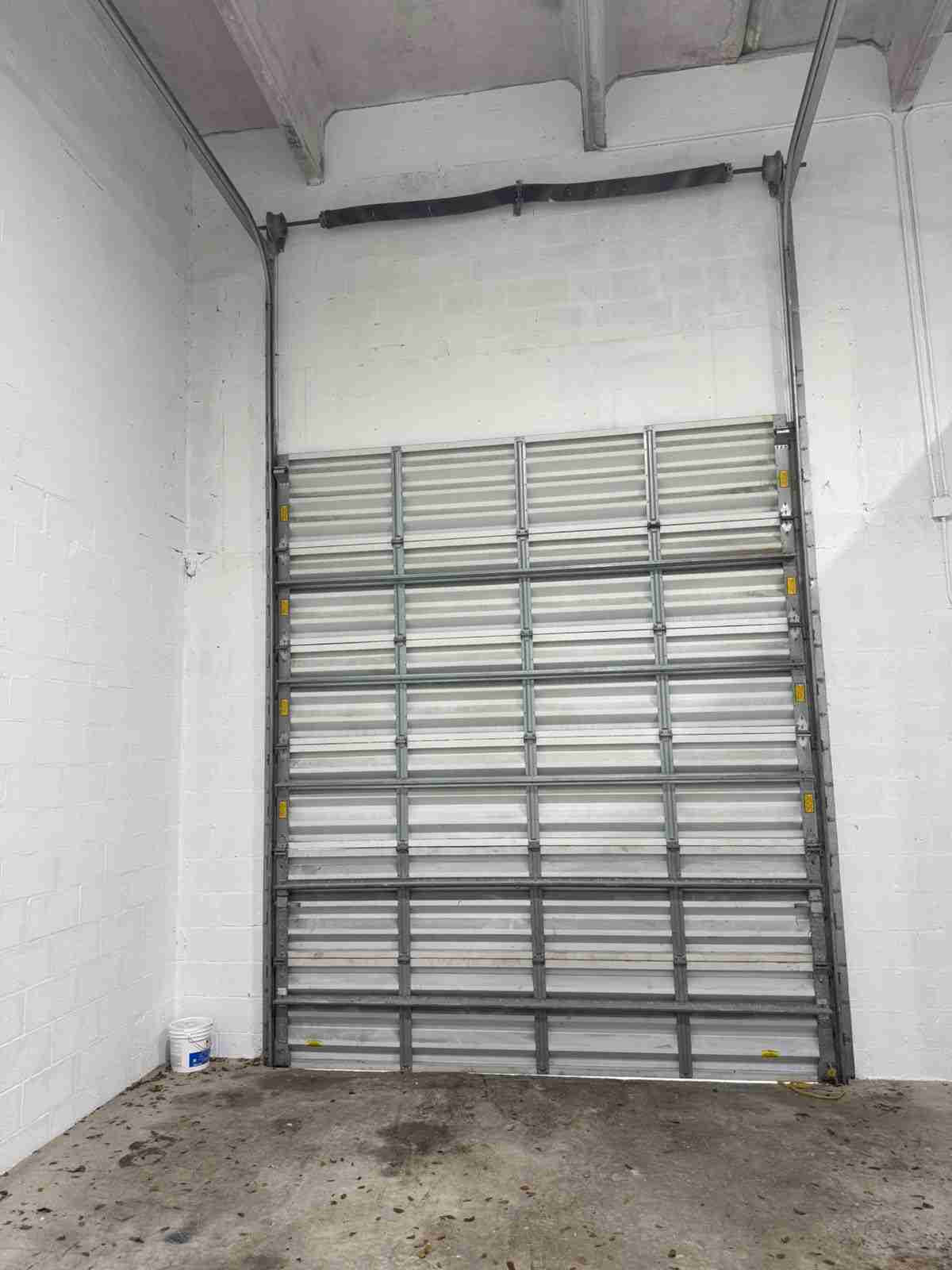
The torsion spring sits above the door on a metal bar. Its job is to hold the weight of the door so the opener does not have to lift it all on its own. When the spring breaks or gets weak, the opener cannot carry the door all the way up and it stops partway.
A broken spring usually makes a loud bang when it snaps. After that, the door may not move at all, or it opens just a little and then stops. Springs hold a lot of tension. They are not safe to touch or replace on your own.
2. Limit Switch Settings Are Off
Every opener has limit switches. These settings tell the motor how far to travel before it stops. If the settings are wrong, the opener may cut off power before the door gets all the way open or closed.
On most openers, the limit switches are small knobs or screw points on the back or side of the motor unit. Check your owner’s manual for the exact location. If your door stops at the same place every time and you can still hear the opener running, this is a good place to start.
3. Safety Sensor Problems
Near the bottom of the tracks, on each side, there are two small sensors. They point at each other and send a beam across the door opening. If anything crosses that beam while the door is moving, the opener stops or reverses. This safety feature has been required on all home openers since 1993.
But sensors can also react when nothing is in the way. Dirt on the lens, a bump to the sensor, or bright sunlight on the receiver can all give a false reading. Check that both sensors point directly at each other. The indicator lights should be solid, not blinking. If a light is blinking or dim, the sensors need to be realigned or cleaned.
4. Something Blocking the Track
The tracks guide the rollers as the door moves up and down. If there is dirt, a dent, or old hardened grease in the track, the rollers can get stuck at that point. The door then stops right there.
Look along both tracks for anything sitting in the channel. Check for dents or spots where the metal looks bent inward. Also look at the rollers. If a roller is cracked or broken, it can jam in the track. Small blockages can be cleaned out. Bent track sections may need to be repaired or replaced.
5. Opener Disconnected from the Door
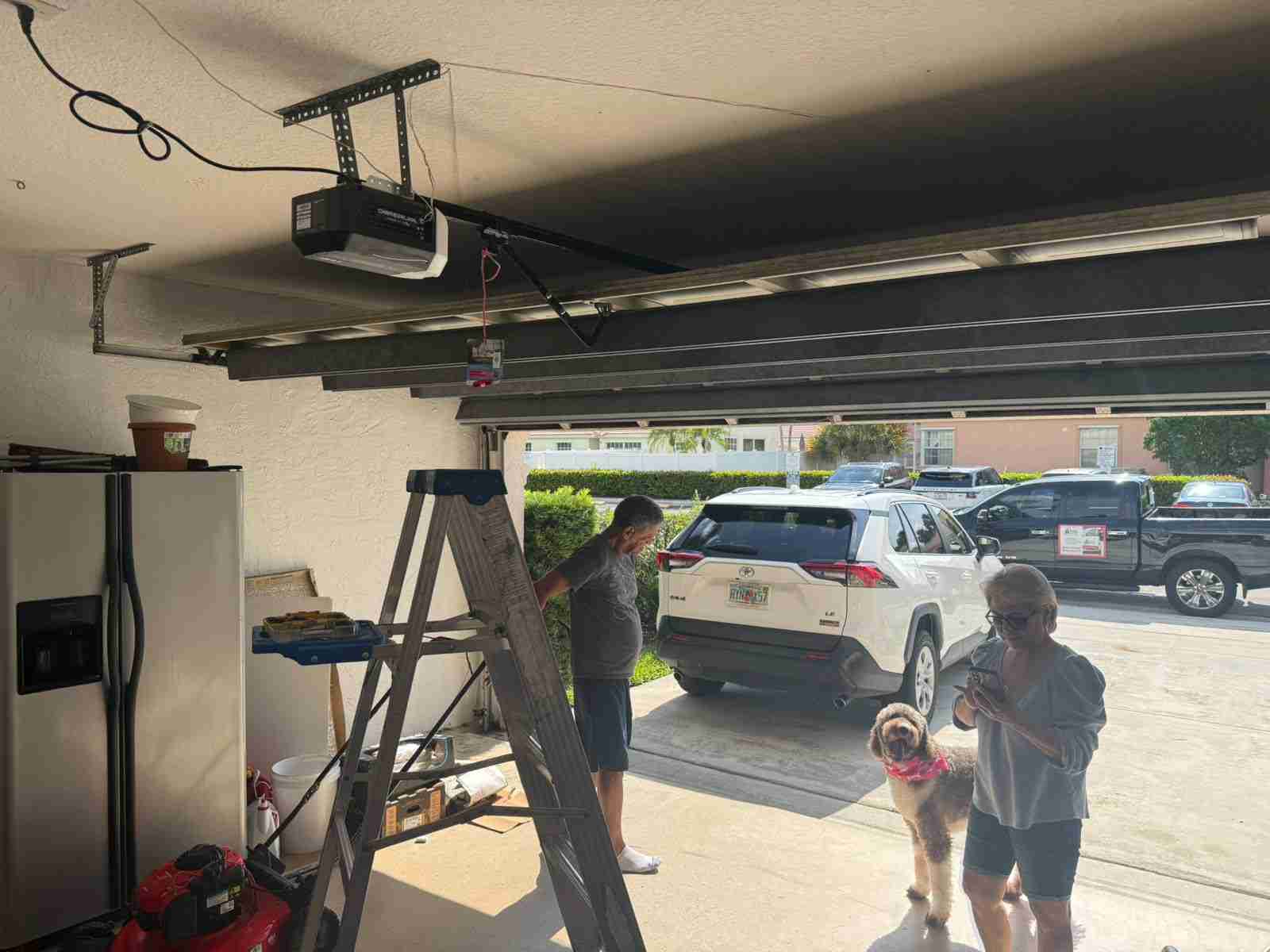
The opener connects to the door through a part called a trolley. The trolley runs along the drive rail and pulls the door open or pushes it closed. There is a red cord hanging from the trolley. If that cord gets pulled, the door disconnects from the opener. The opener will still run, but the door will not move with it.
Check if the trolley is still connected to the drive system. If it has come loose, you can often reconnect it by pulling the red cord toward the door until you hear a click, then running the opener. If the trolley itself is broken, it needs to be replaced.
6. Broken or Loose Cable
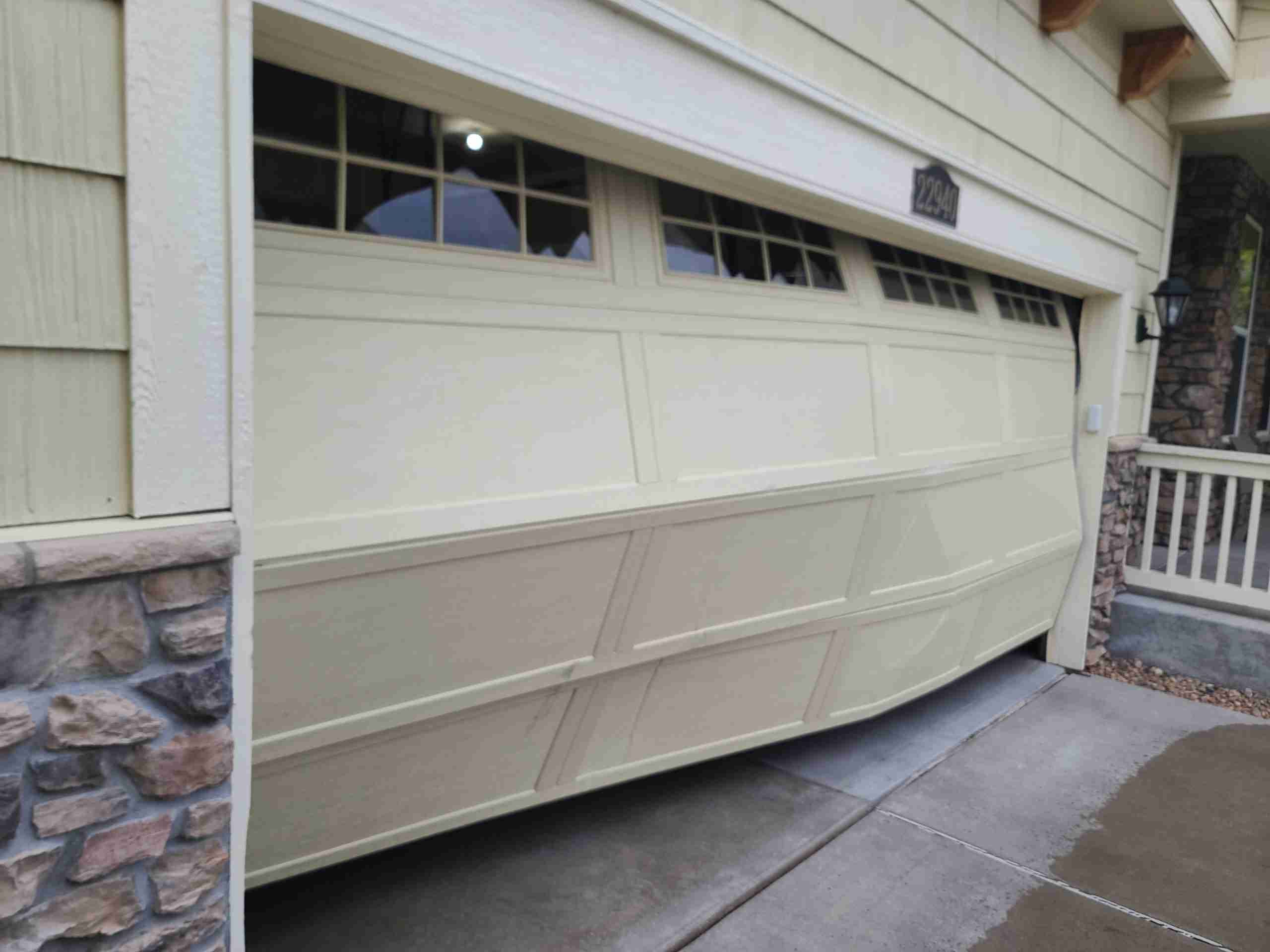
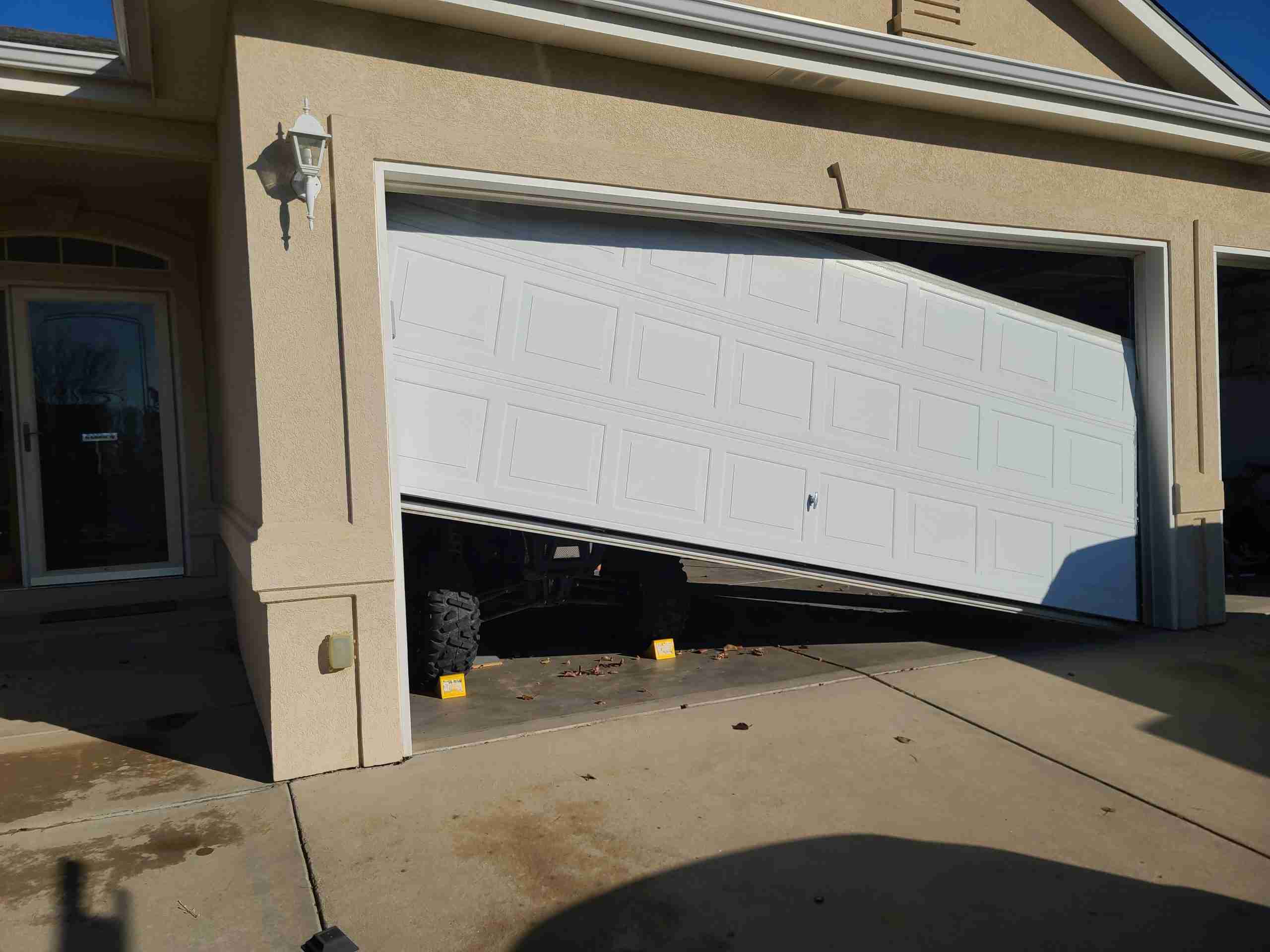
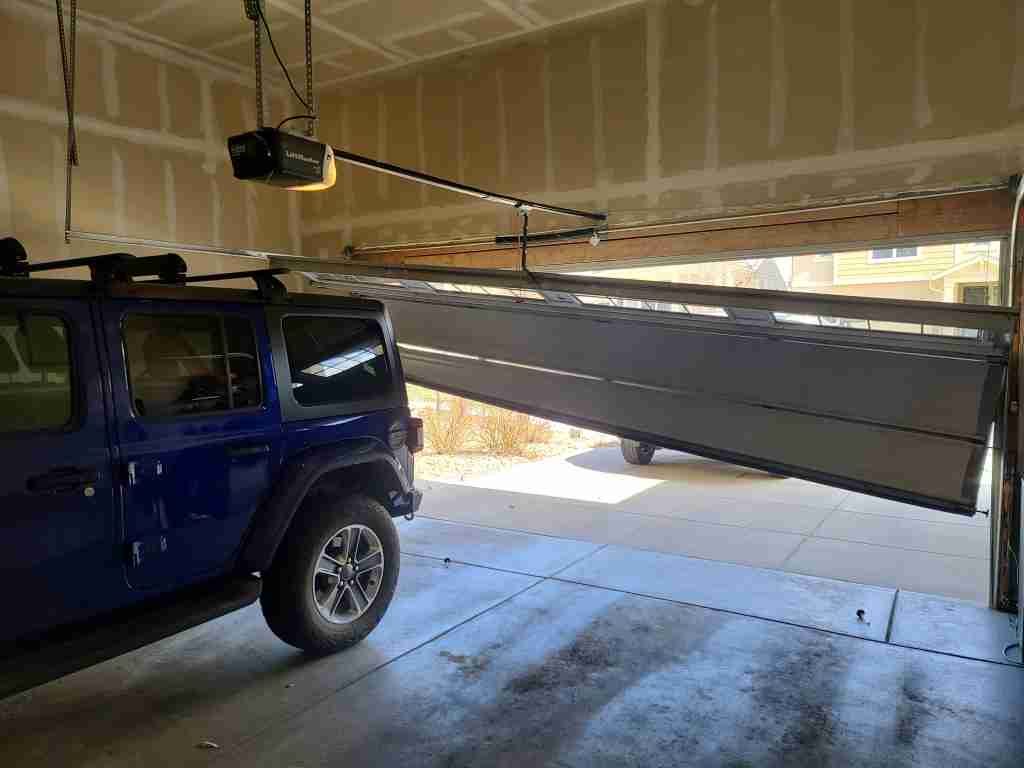
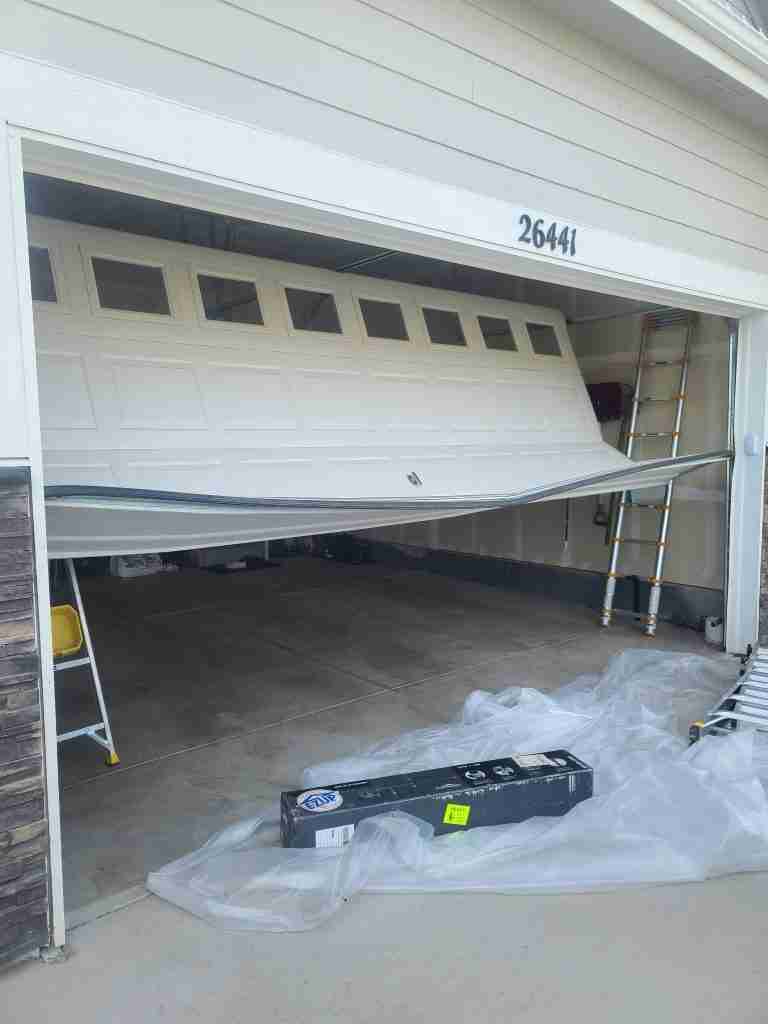
The cables run from the bottom corners of the door up to the spring drums at the top. As the spring turns the drum, the cable winds up and pulls the door. If a cable snaps, frays, or slips off the drum, one side of the door loses support. The door tilts, binds in the track, and stops.
A broken cable is usually easy to spot. You may see it hanging loose on one side or lying on the ground. Like springs, cables are under a lot of tension. Fixing them without the right training and tools is dangerous. This is a job for a technician.
7. Door Off Track
If the door comes off the track, even just a little, it will usually stop before finishing its travel. The rollers catch on the edge of the track or the door rubs against the frame. This can happen if the door gets hit, if a cable breaks, or if rollers wear out.
An off-track door often makes a scraping sound and may look crooked or lower on one side. Do not keep pressing the opener button when this happens. Running the opener on an off-track door can bend the track and cause more damage.
8. Opener Motor or Drive Gear Problems
In hot weather, older motors can overheat during repeated use. Some openers have a thermal shut-off that turns the unit off when it gets too hot. If your door stops halfway but works again after 15 to 20 minutes, the motor may be overheating.
The drive gear is another common issue. Many openers use a plastic gear inside the motor unit. Over time, this gear wears down and strips. When that happens, the motor runs but the door does not move. You may hear the motor going but nothing happens.
Quick Symptom Guide
| Symptom | Likely Cause | Can You Check It? |
|---|---|---|
| Opener light blinks, door stops | Sensor misaligned or dirty | Yes, clean and realign sensors |
| Door stops at the same spot every time | Limit setting off or track blocked | Yes, check limits, look at track |
| Door stops with a grinding noise | Worn rollers or blocked track | Maybe, clear the track first |
| Door looks crooked or tilted | Off track or broken cable | No, call a technician |
| Door feels very heavy to lift by hand | Broken or weak spring | No, call a technician |
| Motor runs but door does not move | Trolley disconnected or stripped gear | Check trolley first; gear needs a technician |
What You Can Check Yourself
Checking the sensors, cleaning the track, and looking at the limit switch settings are all safe to do at home. None of these involve springs or cables. If the sensor lights are blinking, start there. If the door stops at the same spot each time, check that part of the track for debris or damage. If the door stops just short of fully open or fully closed, the limit setting may need a small adjustment.
Before you touch anything on the door, pull the red emergency release cord to disconnect the door from the opener. Do not touch the springs, cables, or spring drums. If checking the safe items does not fix the problem, call a technician.
When You Need a Technician
Some repairs are not safe to do at home, no matter how handy you are. Call a professional if you see any of the following:
- A spring that looks broken, loose, or unwound
- A cable that is slack, frayed, off the drum, or lying on the floor
- A door that looks uneven or sits lower on one side
- Rollers that are cracked, chipped, or have fallen off
- The opener running with no door movement at all
- A loud bang from the spring area before the door stopped working
- Any part that looks bent, broken, or badly worn
A door with a broken spring or snapped cable is not safe to use. It can drop without warning. Do not try to force it open or closed. Get a technician out the same day.
Preventing the Problem
Most garage doors give small warning signs before they stop working. The door might move a little slower. It might make a new sound. The remote might need two presses where one used to work. If you notice these things, get the door checked before a small issue becomes a bigger one.
Some simple upkeep helps keep the system running well. Use a garage door lubricant, not WD-40, on the rollers, hinges, and springs every six months. Check the tracks every few months for dirt or dents. Test the auto-reverse function by placing a 2×4 flat on the ground under the door and pressing close. The door should reverse when it touches the board. If it does not, the force settings or sensors need to be adjusted.
Keeping Your Garage Door Safe and Working
A garage door that stops halfway is a big hassle. It is also a sign that something in the system is wrong. Sometimes the fix is simple, like wiping dirt off a safety sensor or clearing a small pebble out of the track. Other times, the door is trying to warn you about a bigger problem, like a weak spring or a broken cable.
Taking care of small chores like cleaning the tracks and lubricating the rollers is a great way to keep your door running smoothly. However, you should always put safety first. If you see broken springs, loose cables, or a crooked door, leave the repairs to the pros. Catching these problems early keeps your home safe and saves you from costly repairs down the road.
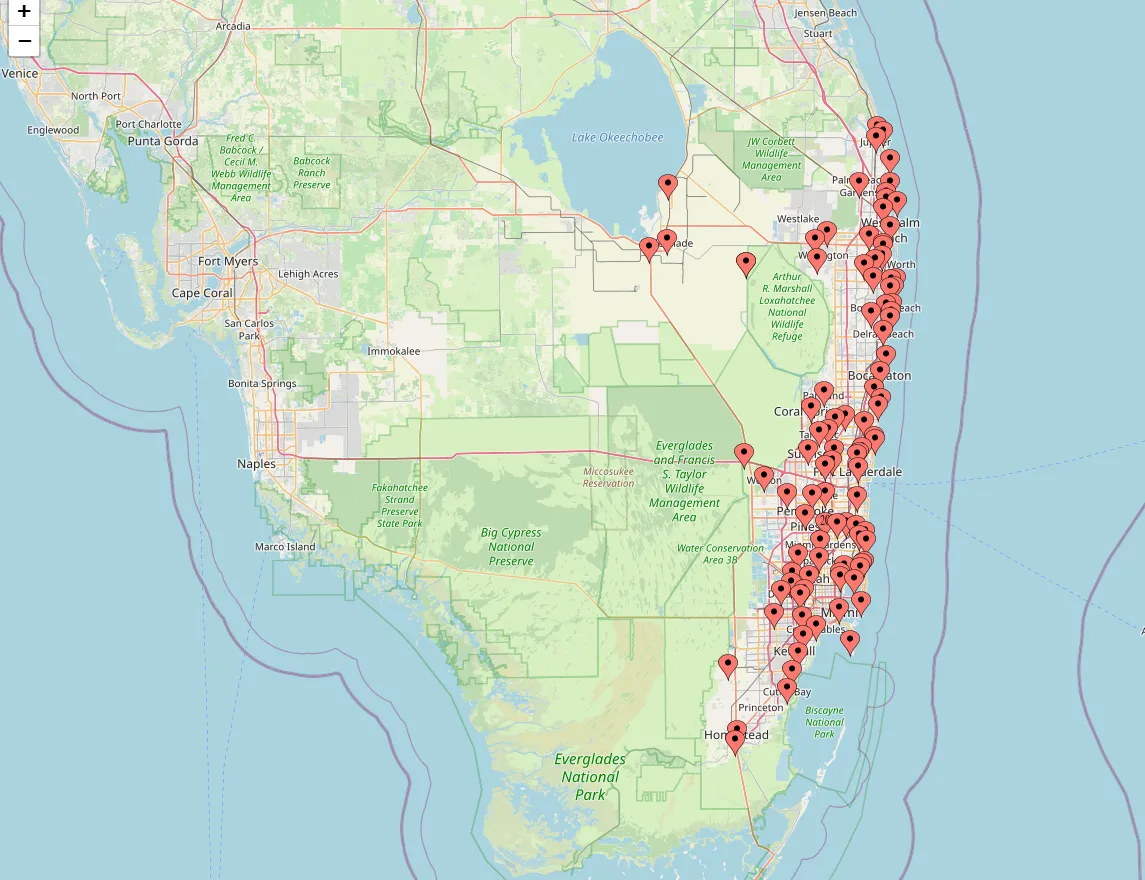
Get Your Door Moving Again
If your door is stopping halfway, the cause is almost always one of the problems listed above. Ariel Garage Door Services is based in Hollywood, FL and serves homeowners across Broward County, Miami-Dade County, and Palm Beach County. We offer same-day repair visits Sunday through Friday and stock parts for LiftMaster, Clopay, Amarr, Chamberlain, Genie, and Craftsman systems.