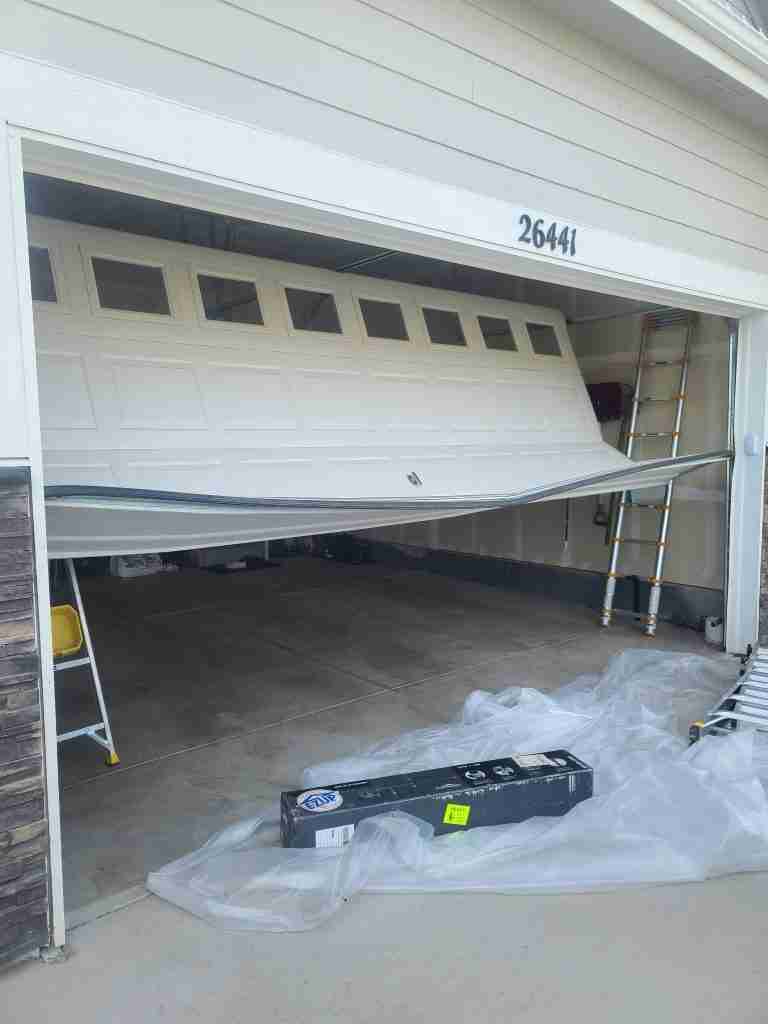
Your garage door works fine one day. The next morning you hit the button and nothing happens. Or the door starts moving, then stops halfway. Or maybe you heard a loud bang from the garage while you were inside the house. Any of these can point to one thing: a broken garage door spring.
Springs carry most of the weight every time your door moves. A standard garage door weighs between 150 and 400 pounds. Without working springs, neither the opener motor nor you can move that door safely. Read on to find out how to spot a broken spring, what type of spring your door likely has, and what steps to take once you know what is wrong.
What Do Garage Door Springs Actually Do?
Garage door springs store mechanical energy. When the door closes, the springs wind up and build tension. When you open the door, that tension releases and the spring does most of the lifting. The opener motor only needs to guide the door along the tracks, not haul its full weight.
Without springs, the door is just a heavy slab. The opener was never built to carry that load on its own. That is why a broken spring usually means the door will not open at all, even if the opener sounds like it is running fine.
Two Types of Garage Door Springs
Before you look for signs of damage, it helps to know which type of spring your door uses.
| Spring Type | Location | How It Works | Common On |
|---|---|---|---|
| Torsion Spring | Horizontal bar above the door opening | Twists along a metal shaft to create torque | Most modern residential doors |
| Extension Spring | Along the horizontal tracks on each side | Stretches and contracts to create tension | Older homes, lighter doors |
Torsion springs are more common on newer homes. Extension springs tend to show up on older doors or lighter single-car setups. Both can break, and both need professional replacement.
Signs Your Garage Door Spring is Broken
1. A Loud Bang or Snap Sound
When a torsion spring breaks, it releases all that stored tension at once. The sound is loud enough to hear from inside the house. Some homeowners describe it as a firecracker going off. If you heard a bang from the garage and the door stopped working right after, the spring is most likely what broke.
2. The Door Will Not Open
If you press the opener button and the door does not move, or barely lifts a few inches, a broken spring is a common cause. The motor is running but it cannot handle the full weight of the door without spring support. Most modern openers cut out after a few seconds to keep the motor from burning out.
3. The Door Is Very Heavy to Lift Manually
A door in good working order should lift by hand with about 10 pounds of effort. Disconnect the opener and try to raise the door a few inches. If it feels like dead weight, the springs are not doing their job. You should be able to feel the difference right away.
4. The Door Opens Crooked or on One Side
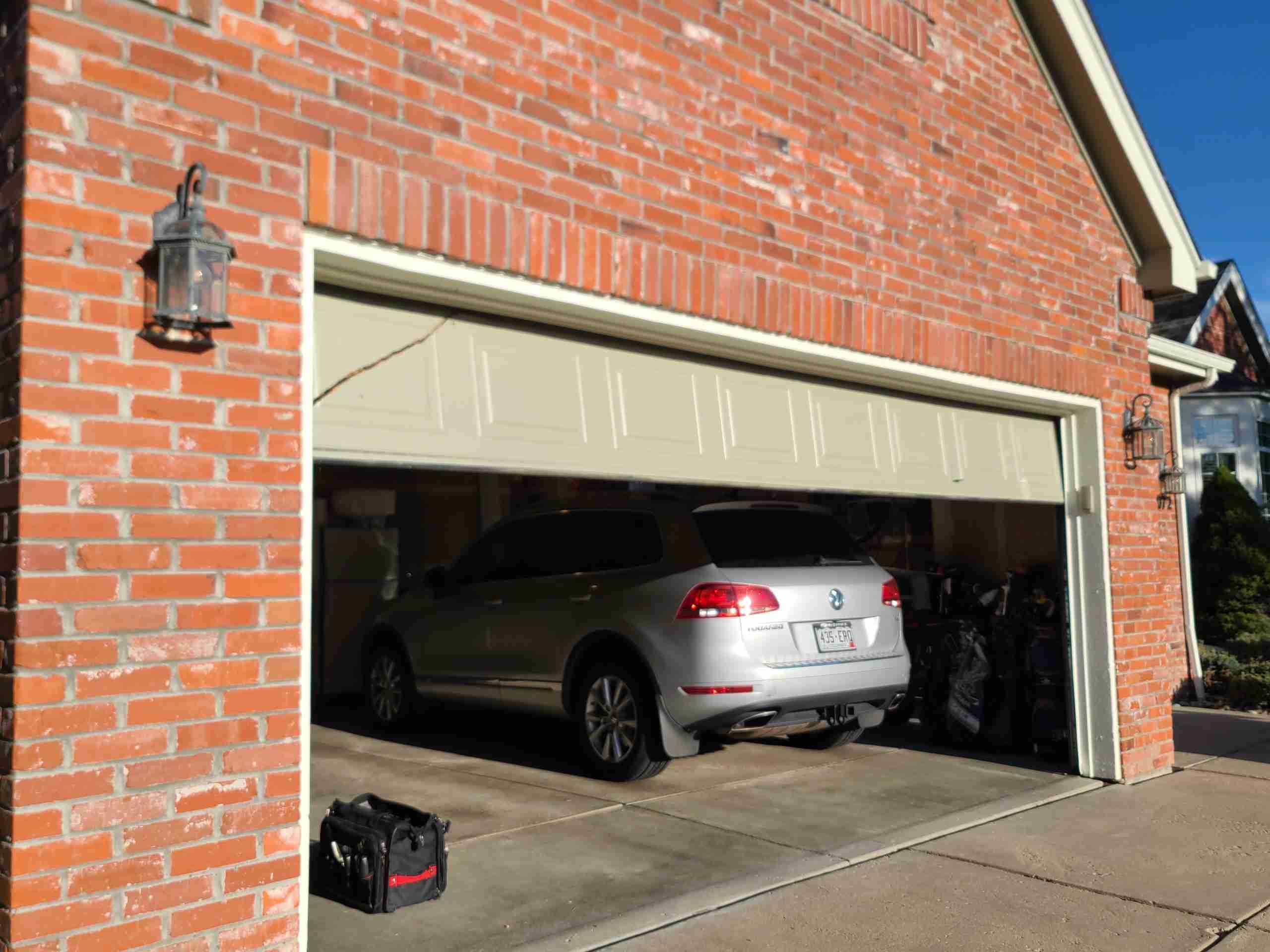
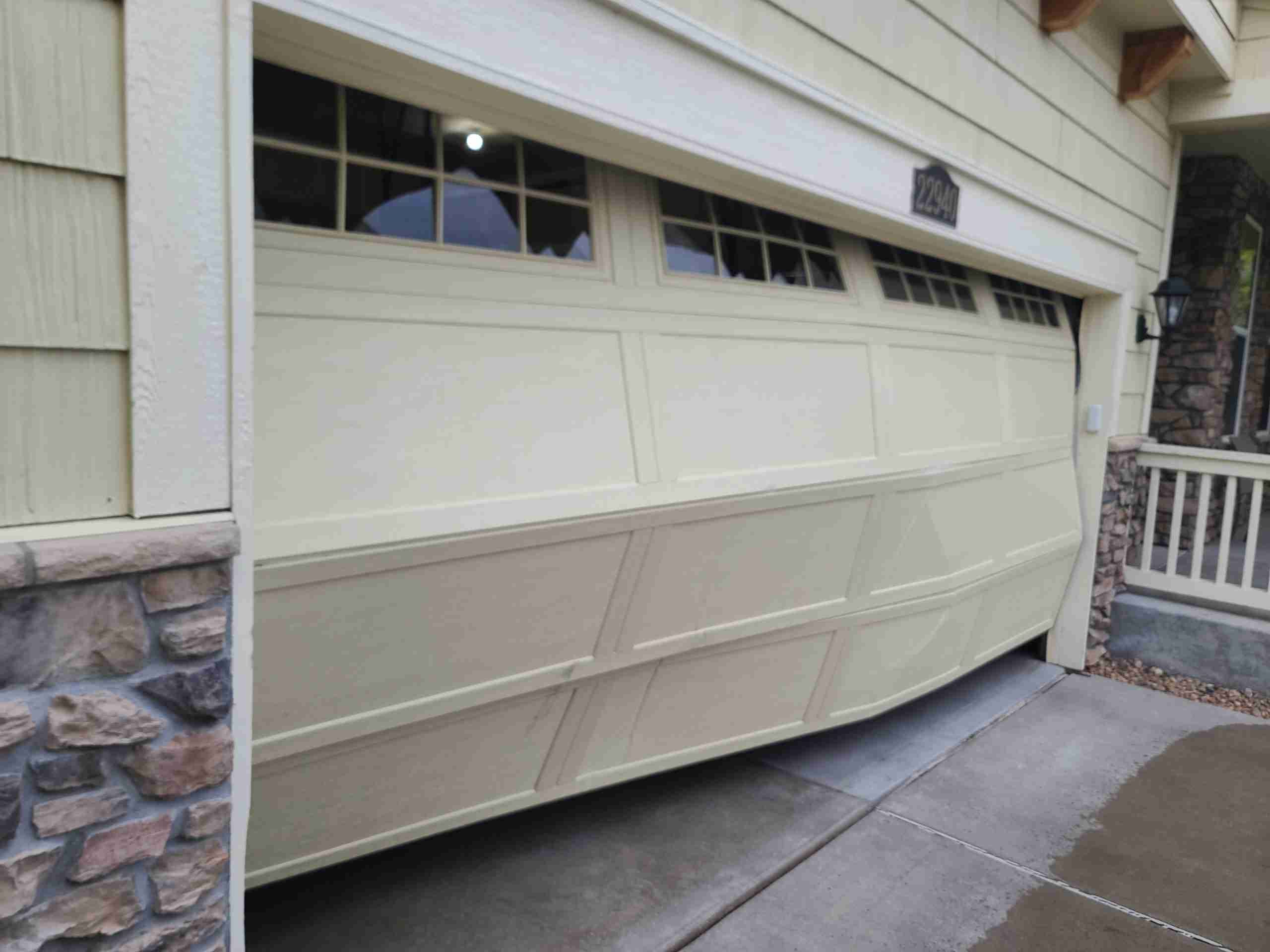
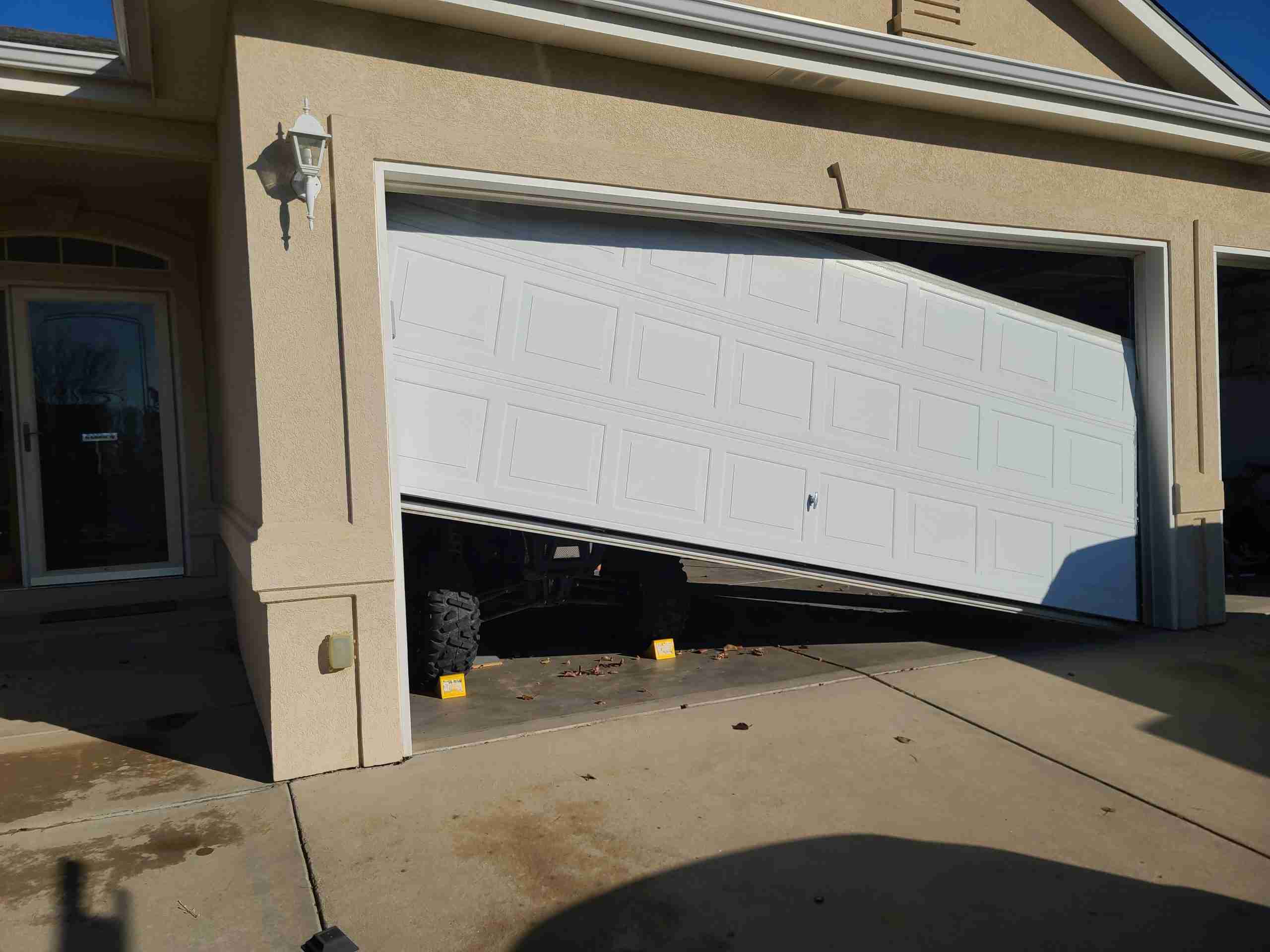
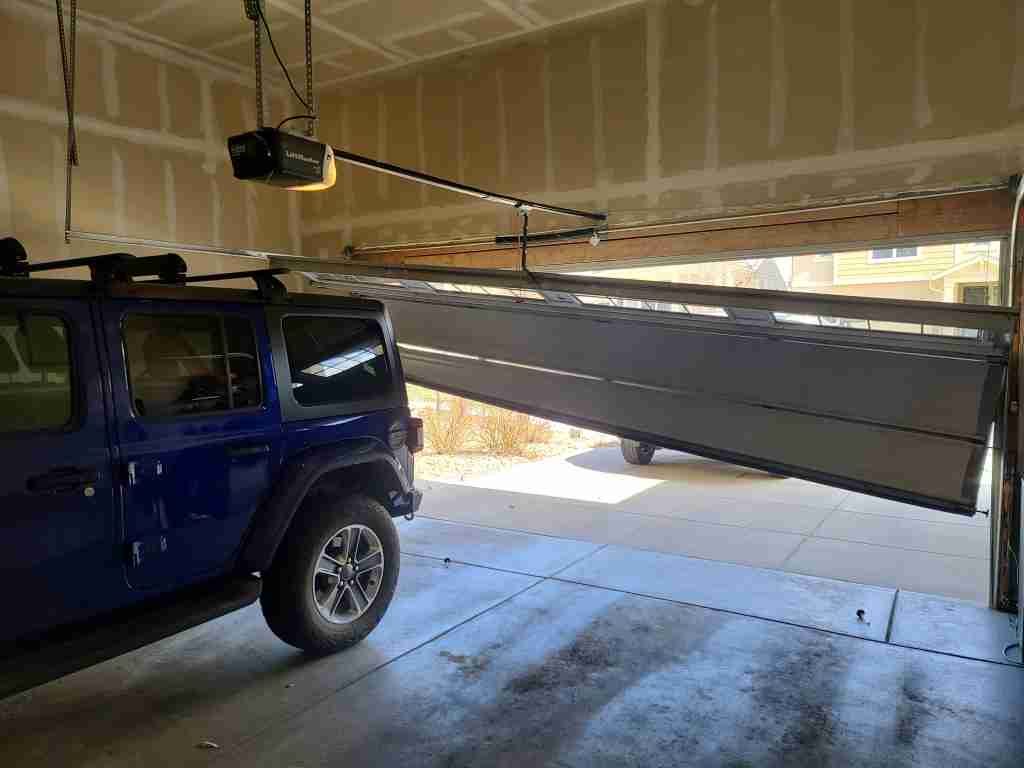
Extension springs work in pairs, one on each side. If one breaks, the door loses balance. It may open tilted, with one side higher than the other, or it may come off the track entirely. If your door looks uneven when it moves, look at the extension springs along the side tracks.
5. You Can See a Gap in the Spring
Torsion springs sit on a metal bar above the door. If one has broken, you will often see a gap or separation in the coil. It will look like the spring has split into two sections with a space between them. Walk up to the spring and take a look before calling for service.
6. The Opener Runs but the Door Does Not Move
You can hear the motor running. The opener chain or belt is moving. But the door just sits there. This happens because the opener is working without enough force to raise the door. A broken spring is usually the reason, not the opener itself.
7. Cables Are Loose or Hanging
The cables on your garage door work alongside the springs. When a spring breaks, the cable tension shifts and the cables can go slack or hang off to one side. Loose cables near the bottom corners of the door or along the side tracks often go hand in hand with a spring problem.
8. The Door Slams Shut or Will Not Stay Up
If the springs are worn rather than fully broken, the door may not stay open. It drops faster than it should, or it will not hold its position when raised manually. A door that does not stay put is a sign the springs are losing tension and getting close to failing.
Torsion vs. Extension Spring: Which One Broke?
The signs can look similar, but knowing which type you have makes it easier to describe the problem when you call.
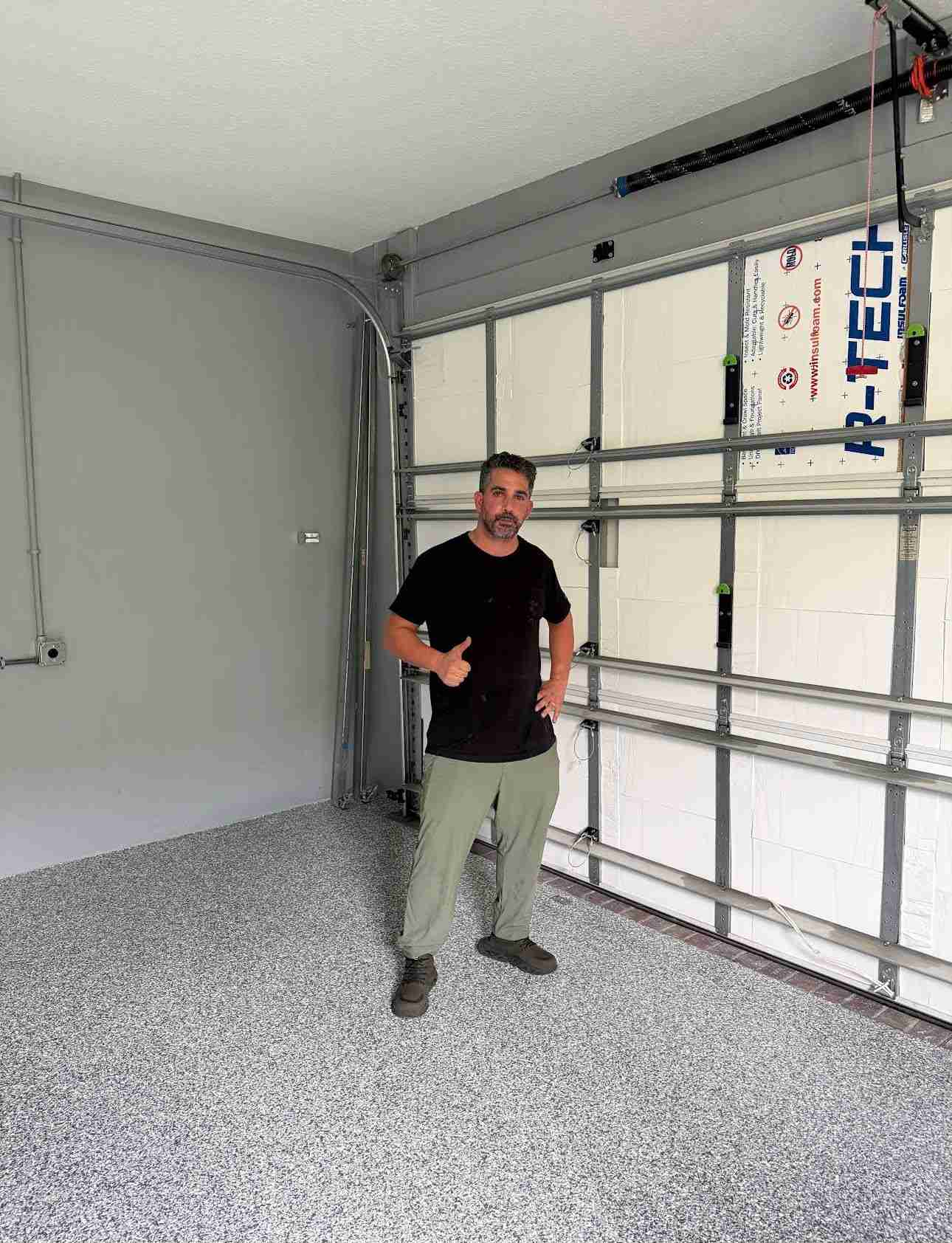
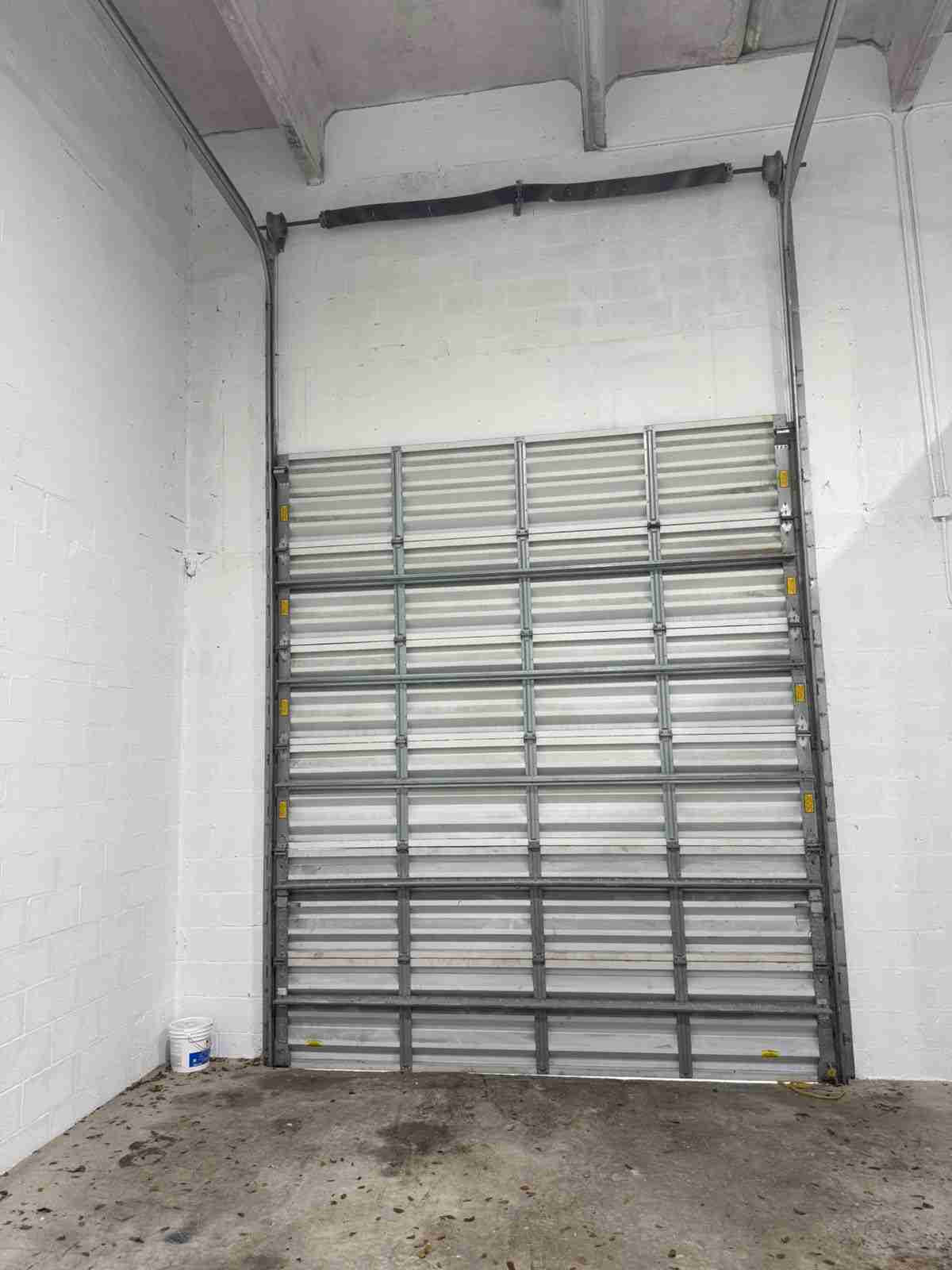
If you have torsion springs: Look above the door opening at the horizontal metal bar. There should be one or two springs wrapped around it. Look for a gap, a break in the coil, or a spring that sits lower on one end. Springs that look stretched out or uneven are also showing wear.
If you have extension springs: Look along the horizontal tracks that run toward the back of the garage. The springs run parallel to the tracks. If one is broken it will hang loose or you may see it lying on the floor. The door may also sit unevenly on the tracks as a result.
How Long Do Garage Door Springs Last?
Most standard garage door springs are rated for around 10,000 cycles. One cycle is one open and one close. Four uses per day works out to roughly seven years. High-cycle springs rated at 20,000 to 50,000 cycles are available and hold up much longer before needing replacement.
Here in South Florida, humidity and salt air speed up wear on metal parts, springs included. Doors used heavily or left without maintenance tend to see springs fail sooner than average. Keeping up with regular lubrication and inspections adds time to the life of your springs.
What NOT to Do When a Spring Breaks
Springs hold a lot of tension. Replacing them without the right tools and training puts you at serious risk.
- Do not try to open the door: Using the opener or forcing the door open with a broken spring can damage the motor, bend the tracks, or cause the door to drop suddenly.
- Do not try to replace the spring yourself: Torsion springs hold extreme tension. A spring that releases without warning can cause serious injury. Leave it to someone trained for the job.
- Do not keep pressing the opener button: Running the motor against a door it cannot lift wears it out faster and can cause additional damage to the opener.
The garage door spring repair page covers what the repair process involves and why it needs to be done by a trained technician.
What to Do Next
Step 1: Disconnect the opener
Pull the red emergency release cord hanging from the opener rail. This separates the door from the motor so the opener does not keep working against a door it cannot move.
Step 2: Leave the door closed
With a broken spring, the door is not balanced. Opening it by hand is not safe. Keep it closed until a technician arrives and can handle it properly.
Step 3: Call a professional
Spring replacement is one of the most common garage door repairs. A trained technician can usually finish the job in one to two hours. They will also check the cables, rollers, and balance while on-site. If the opener took any strain, that gets checked too. Ariel Garage Door Services handles spring repairs across Hollywood, Fort Lauderdale, Boca Raton, and surrounding South Florida areas.
Step 4: Ask about replacing both springs
If you have two torsion springs and one breaks, the other has done the same number of cycles. Most technicians will suggest replacing both at once. It costs more upfront but avoids a second service call a few months down the road.
Can You Open a Garage Door With a Broken Spring?
Some lighter doors can be lifted manually with a broken spring, but it takes two people and real effort. The door is unbalanced and can drop without warning if your grip slips. It is not something to make a habit of.
If you need to get a car out in an emergency, disconnect the opener using the red cord, then have two people lift the door from the bottom with hands well away from the sides. Prop it open with something solid placed under the center of the door. Do not walk away and leave a door with a broken spring sitting open.
How Much Does It Cost to Replace a Garage Door Spring?
Cost depends on the spring type, door size, and local rates. In South Florida, most homeowners pay somewhere between $200 and $400 for a professional spring replacement. That covers parts, labor, and a check of the nearby hardware. Upgrading to high-cycle springs costs more upfront but cuts down on how often the springs need changing.
Ask for a quote before any work starts. Ariel Garage Door Services gives you an estimate first, so you know what the job costs before the technician picks up a tool.
Does This Affect My Garage Door Opener Too?
If the opener ran several times against a door it could not lift, the motor may have taken some strain. Most modern openers have overload protection that cuts the unit off before real damage sets in, but having the opener looked at during the same service call is a good idea.
If the opener is older or has been making grinding or straining sounds lately, a spring failure is a good reason to get the whole system checked at once. The garage door opener repair page covers what that kind of service involves.
Spring Problems and What They Usually Mean
| What You Notice | Likely Cause |
|---|---|
| Loud bang, door stops working | Spring broke |
| Door very heavy or will not lift | Spring broken or lost tension |
| Door opens crooked or tilted | One extension spring broken |
| Visible gap in spring above door | Torsion spring snapped |
| Cables hanging loose | Spring failure affecting cable tension |
| Door drops fast or will not stay up | Spring worn, tension lost |
| Motor runs but door does not move | Spring broken, motor working against full door weight |
When Should You Get the Springs Inspected?
You do not have to wait for a spring to snap. If the door feels heavier than it used to, makes new noises when moving, or does not travel evenly, those are signs worth looking into. A standard garage door inspection covers the springs along with cables, rollers, and the opener.
Getting It Fixed in Hollywood
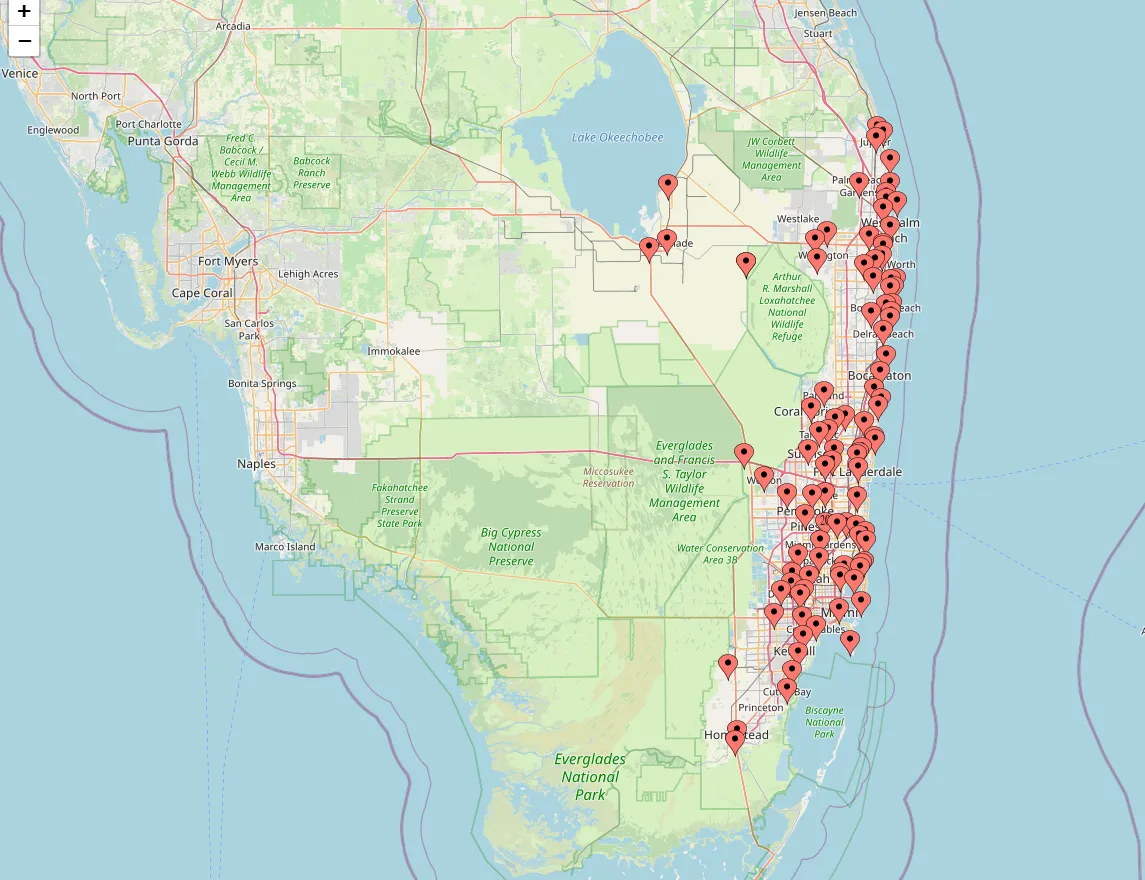
Ariel Garage Door Services is based in Hollywood, FL and covers Broward County, Miami-Dade County, and Palm Beach County. Spring repairs are available Sunday through Friday, 8:00am to 6:00pm. Same-day service is available for emergency repairs.
If you are not sure whether the spring is the problem or something else is going on with the door, a technician can look at it on-site and walk you through what needs to be done before any work starts.
Ready to Stop Guessing? Here Is What to Do in Hollywood, FL
A broken spring does not fix itself. The longer the door sits unused or gets forced open with a damaged spring, the more wear builds up on the cables, tracks, and opener. Most repairs are done in under two hours and the door is back to normal the same day.
If you are in Hollywood, Fort Lauderdale, Boca Raton, or anywhere nearby, call Ariel Garage Door Services at (561) 677-2840 or book online to get a free on-site estimate and have the spring sorted out.