A garage door that opens slowly is a problem that many people ignore for months. They press the button, wait, and simply accept it. We often hear, “It has been like this for a while.” A garage door does not become slow without a reason.
Sometimes the fix takes ten minutes and a can of lubricant. Sometimes a spring may be close to breaking. Below are the reasons, the things you can check by yourself, and the signs that it is time to call a professional.
How slow is too slow?
Most garage doors open in ten to fifteen seconds. The exact number is less important than the change. If it used to take twelve seconds and now takes twenty-five, something is wearing out.
One note before you worry. Some newer openers are designed to move slowly on purpose using a soft start and a soft stop. If the garage door slows in the last few inches at the top, that may be normal. If the garage door moves slowly all the way up and makes noise or shakes, that is not normal.
Important to know: A slow garage door forces every part to work harder. The longer you wait, the more they get worn.
Dry or worn rollers and hinges
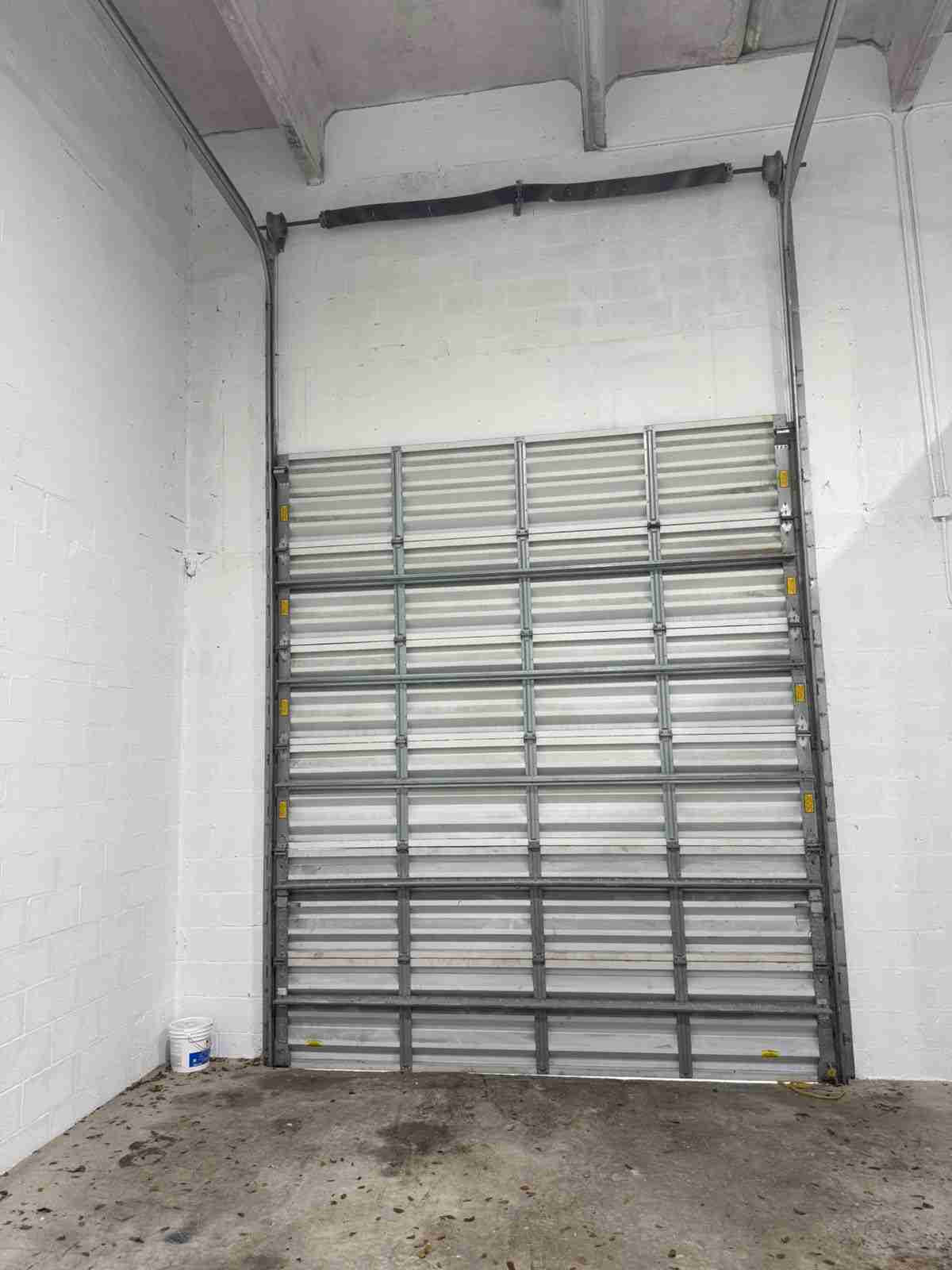
Your garage door moves on wheels called rollers. They roll inside the tracks on each side. The hinges let the panels bend as the garage door rises. They all move whenever you use the garage door, so after a few years they can become dry, rusty or simply worn out. Then the garage door drags instead of rolling.
Look at the rollers. Do any wobble, squeak or have flat spots? Those are worn. A quick spray of garage door lubricant helps the dry rollers. The worn rollers must be replaced. Most professionals replace the set at the same time.
Weak or worn springs
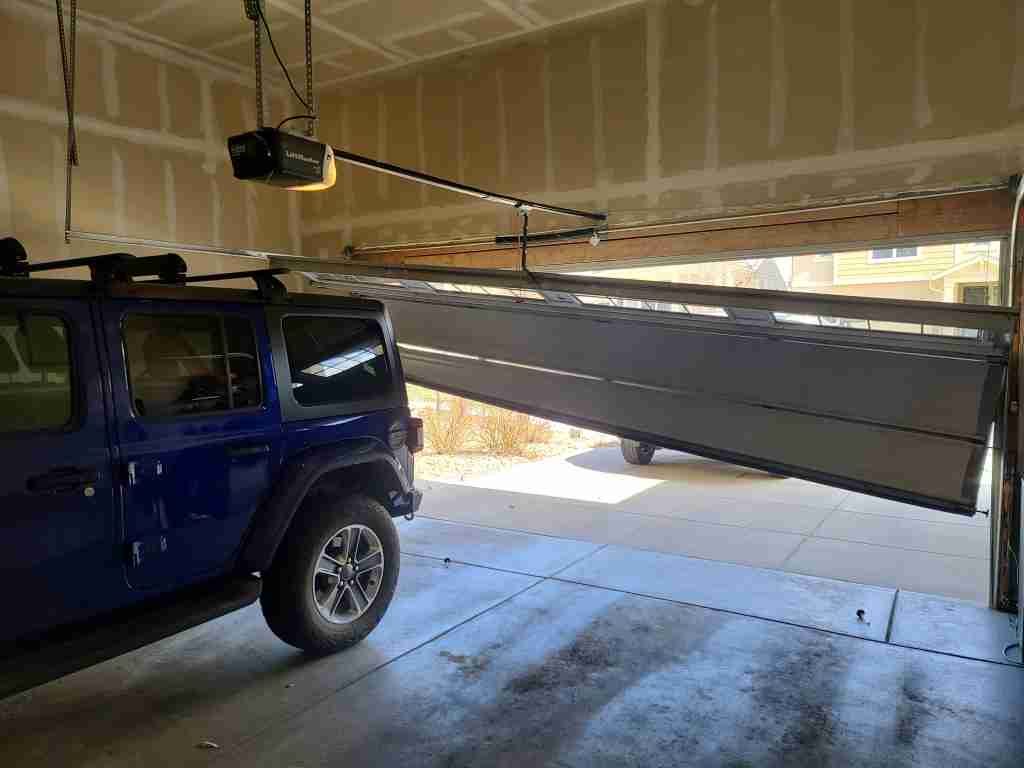
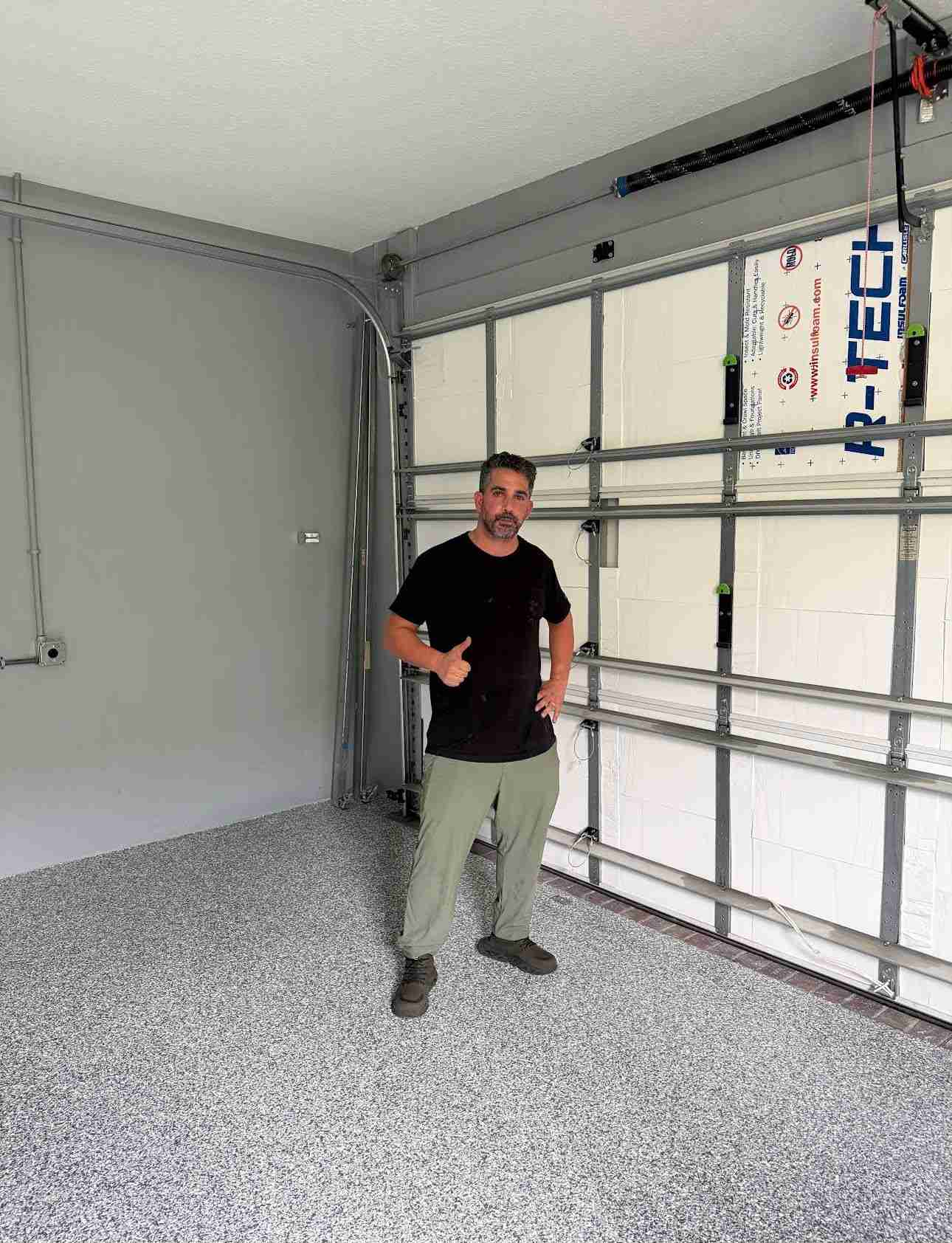
Springs lift most of the weight of the garage door. They hold up the garage door so the opener does not have to. When a spring weakens, the garage door feels heavy. The opener must push harder. That is when the garage door opens slowly, stops partway, or crashes down.
Standard springs are rated for ten thousand cycles. One cycle means one open and one close. If you use the garage door four times a day, that is seven years. Heavier garage doors, such as wooden garage doors or hurricane impact doors, can wear the springs out faster.
You can test the springs. With the garage door closed, pull the cord to disconnect the opener, then lift the garage door by hand. It should feel fairly light. It should also stay up about halfway. If it feels heavy, the springs are probably broken. This is a job most people should not try because garage door spring repair involves parts under a lot of tension.
Safety: If the garage door feels very heavy, do not hold it up. Do not let it fall halfway. Lower it slowly. Stop there. Springs can break without warning.
Tracks that are dirty, bent or loose
The tracks guide the rollers. If a track is off, the garage door fights to go up. Walk along both sides. Look for:
- Dents or bends. Even a small dent can slow a roller down.
- Loose brackets. A wobbly track will not keep the garage door lined up.
- Gunk, such as grease, leaves and dirt.
- Rust, which feels rough and makes noise.
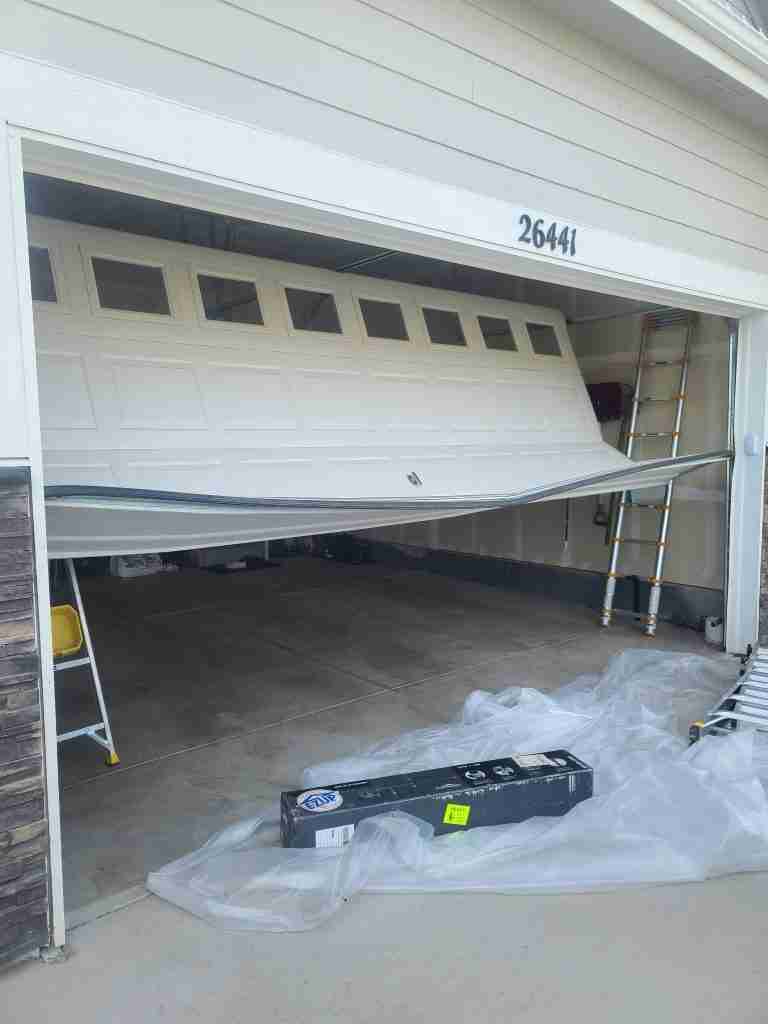
A rag removes the dirt. A bend is different. If the garage door has jumped out of the track before, that means a track is clearly bent and requires track repair. Do not try to force it back.
A worn-out garage door opener
Sometimes the garage door is fine. The opener is the problem. Most openers last ten to fifteen years. After that the motor wears down. The gears wear down. Chains stretch. Belts sag.
You end up with an opener that hums and moves the garage door in jerks.
There are also settings. Many openers have force and travel limits that can shift. Do not simply set the force to the maximum. The garage door might not reverse if something blocks it. That is dangerous. A power surge can also damage the circuit board. A professional can tell you whether it is worth repairing the opener or if a new one is needed.
Quick guide: what you notice and what it usually means
| What you notice | Likely cause | Try it yourself? |
|---|---|---|
| Door moves smoothly | Springs or an aging opener | Call a pro |
| Door shakes or jerks | Worn rollers or dirty tracks | Check first, then call a pro |
| Door stops halfway | Spring tension or force settings | Call a pro |
| Opener hums but door does not move | Broken spring or stripped opener gear | Call a professional |
Checks you can do today
You just need a ladder, a rag and some garage door lubricant.
- Watch the garage door run. Does the garage door shake? Does one side of the garage door move ahead of the other?
- Wipe the tracks with a rag. Do not grease the tracks. Grease only attracts dirt.
- Spray the hinges, roller stems and springs a little. Plain WD-40 is more of a cleaner, so it wears off quickly.
- Tighten bolts on the brackets. Leave the corner brackets alone. Corner brackets hold cable under tension.
- Do the balance test from the springs section.
Tip: Do this once or twice a year. It takes twenty minutes. It catches problems early.
How South Florida weather plays into it
Florida is tough on garage doors. Heat and humidity make metal rust faster. Grease gets thin in the heat, picks up dust, and becomes gummy. Near the coast it is worse because salt in the air damages hinges, springs and tracks. If you need garage door repair in Boca Raton, there is a good chance rust is part of the problem.
Then there is storm season. Lightning and power surges can damage an opener’s circuit board in one hit. If the garage door became slow after a storm, that could be why. It is a reason people call for garage door repair in Fort Lauderdale after a rough summer. A surge protector on the opener’s outlet helps.
Garage door repair across Palm Beach and Broward
Everything applies wherever you live. The mix is a little different from town to town. We see that people who need garage door opener repair in Delray Beach or garage door spring repair in Jupiter are mostly dealing with salt, rust and storm damage. Inland it is about heat and heavy use. If you need garage door repair in Wellington FL or garage door repair in Weston FL, it is usually the springs and openers that fail first. Same in Royal Palm Beach, Coral Springs and Davie, where many homes have garage doors that are used all day.
When to call a pro
Some of this is fine to try yourself. Some of it is not. Call a professional if:
- The garage door feels very heavy when you lift it by hand
- You see a gap in the spring or a frayed cable
- The garage door stops partway or reverses on its own
- The opener hums or clicks but the garage door barely moves
- You have done the checks and nothing changed
Think about age. When a garage door is twenty years old and three parts are failing, we find that garage door replacement can make more sense than fixing it one part at a time.
Don't wait until it stops opening
A slow garage door is easy to ignore. You adjust, you wait a few seconds, you move on. It means something is wearing out, and parts do not get better on their own. Catch it early. It is usually a small fix.
So do the checks, keep things lubricated, and leave the springs to a professional. If you cannot tell what is going on, have someone take a look. Nobody wants to find a bad spring at 7 a.m. with the car stuck inside.
Door still dragging?
Not sure what is slowing the garage door? Call Ariel Garage Doors at (561)489-3726 . We serve Palm Beach, Broward and Miami-Dade counties. A technician can take a look. They tell you what is wrong. They explain the repair before any work begins.